
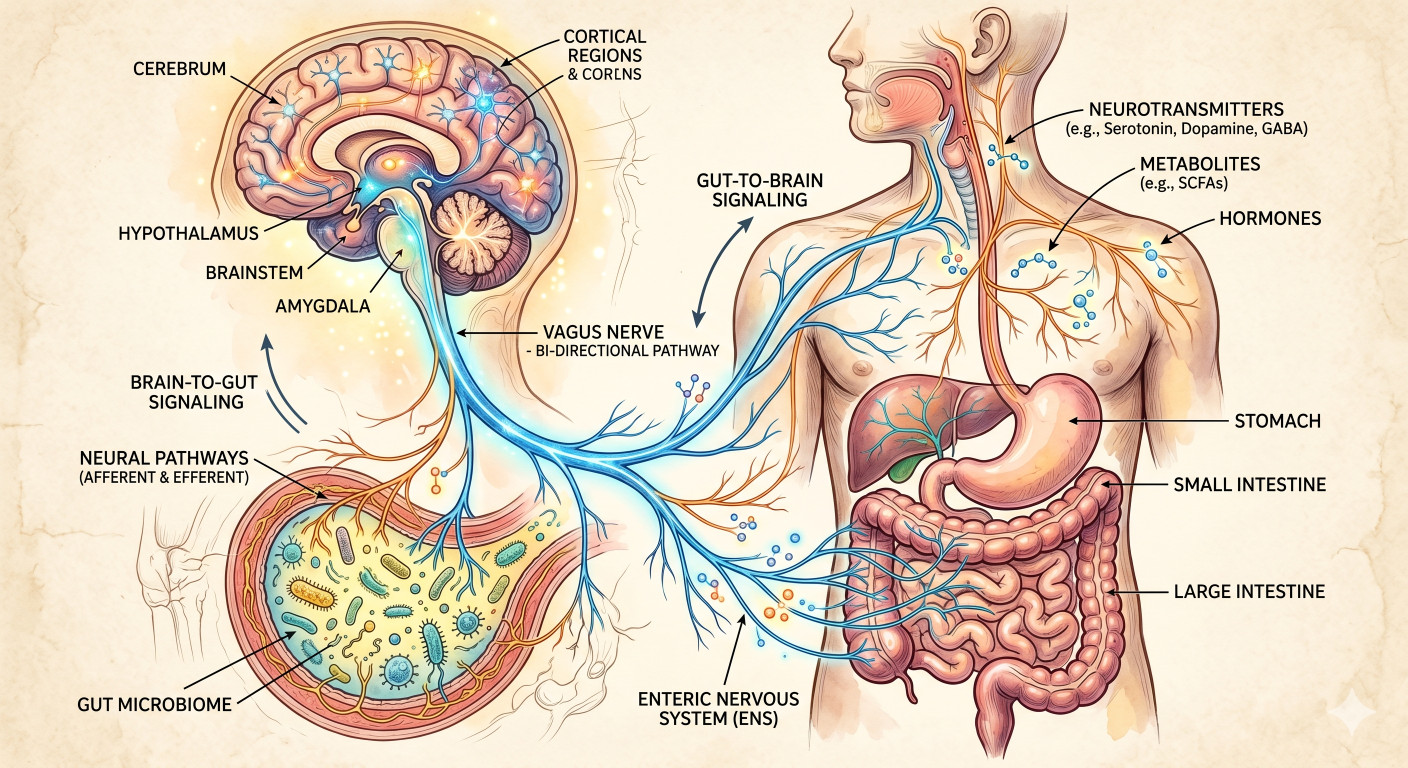
If you’ve ever felt unusually anxious after a bout of digestive trouble, or noticed that stress upsets your stomach, you’ve experienced the gut-brain connection firsthand. This bidirectional communication highway between your digestive system and your brain — now known as the gut-brain axis — is one of the most exciting and rapidly developing areas of medical science in 2026.
The implications are profound: what you eat doesn’t just affect your physical health — it directly influences your mood, mental health, cognitive function, and even your risk of neurological conditions. Understanding the gut-brain connection may be one of the most important things you can do for your overall wellbeing.
What Is the Gut-Brain Axis?
The gut-brain axis refers to the complex, bidirectional communication network linking the gastrointestinal system with the central nervous system. This connection operates through multiple pathways: the vagus nerve (the longest cranial nerve in the body, running directly from brainstem to gut), the enteric nervous system (a complex network of over 500 million neurons embedded in the gut wall, sometimes called the “second brain”), the immune system, and chemical messengers including neurotransmitters and hormones produced in the gut.
Perhaps most remarkably, your gut produces approximately 95% of your body’s serotonin — the neurotransmitter most associated with mood regulation, happiness, and wellbeing. This single fact reframes our understanding of mental health: the gut is not a passive digestive organ — it is an active participant in your emotional and psychological life.
The Microbiome: Your Inner Ecosystem
Central to the gut-brain connection is the gut microbiome — the vast community of trillions of bacteria, viruses, fungi, and other microorganisms that inhabit your digestive tract. Each person’s microbiome is as unique as a fingerprint, shaped by genetics, birth method, diet, environment, medications, and lifestyle.
Research has established that the composition of your gut microbiome has significant effects on brain function and mental health. Certain gut bacteria produce neurotransmitters and short-chain fatty acids that directly influence brain chemistry. Others modulate inflammation — a key driver of depression, anxiety, and neurodegenerative conditions.
Studies in germ-free mice — animals raised without any gut bacteria — demonstrated dramatically altered brain development, stress responses, and anxiety-like behavior compared to mice with normal microbiomes. When gut bacteria from anxious human donors were transplanted into these germ-free mice, the mice displayed increased anxiety — compelling evidence of the microbiome’s direct influence on mental state.
The Gut-Mental Health Connection: What the Research Shows
The link between gut health and mental health conditions is now supported by substantial evidence. People with irritable bowel syndrome (IBS) have significantly higher rates of anxiety and depression than the general population — and the relationship is not simply one of stress causing gut symptoms. The gut microbiome itself appears to influence mood and anxiety through its effects on neurotransmitter production and the stress response system.
A landmark 2019 study published in Nature Microbiology, analyzing the gut microbiomes of over 1,000 participants, found that two groups of gut bacteria — Coprococcus and Dialister — were consistently depleted in people with depression, even after controlling for antidepressant use. These bacteria produce butyrate, a short-chain fatty acid with known anti-inflammatory and neuroprotective properties.
Research into psychobiotics — probiotics specifically selected for their mental health benefits — is advancing rapidly in 2026. Early clinical trials have demonstrated measurable improvements in depression, anxiety, and stress response from targeted probiotic interventions, pointing toward a future where gut microbiome modulation becomes a standard tool in mental health treatment.
How to Support Your Gut-Brain Axis
Eat a Diverse, Plant-Rich Diet
The single most powerful thing you can do for your gut microbiome is eat a wide variety of plant foods. Dietary fiber — found in vegetables, fruits, legumes, whole grains, nuts, and seeds — is the primary fuel source for beneficial gut bacteria. Research consistently shows that people who eat 30 or more different plant foods per week have significantly more diverse and healthy microbiomes than those eating fewer varieties.
Include Fermented Foods
Fermented foods — yogurt, kefir, kimchi, sauerkraut, miso, tempeh, and kombucha — are rich in live bacteria that can beneficially influence the gut microbiome. A 2021 Stanford study found that a diet high in fermented foods significantly increased microbiome diversity and reduced inflammatory markers — with greater effects than a high-fiber diet alone.
Minimize Ultra-Processed Foods
Ultra-processed foods — those containing long lists of artificial additives, emulsifiers, and preservatives — have been consistently linked to reduced microbiome diversity and increased gut inflammation. Emulsifiers in particular appear to disrupt the protective mucus layer lining the gut, allowing bacteria and their products to trigger systemic inflammation that reaches the brain.
Manage Stress
The gut-brain axis runs both ways: just as gut health affects mental health, psychological stress directly disrupts the gut microbiome and intestinal barrier function. Chronic stress alters gut motility, increases intestinal permeability, and changes the composition of gut bacteria. This creates a vicious cycle where stress degrades gut health, which worsens mood and stress resilience.
Regular mindfulness practice, adequate sleep, physical exercise, and genuine social connection all support gut health through their stress-reducing effects.
Be Thoughtful About Antibiotic Use
Antibiotics, while life-saving when necessary, can cause significant disruption to the gut microbiome that persists for months or even years. When antibiotics are genuinely needed, taking a high-quality probiotic supplement during and after the course and following with a diversity-rich diet can help restore microbiome health more quickly.
Conclusion
The gut-brain connection is one of the most exciting frontiers in medicine — and it has profoundly practical implications for how we care for our health. A healthy gut supports a healthy mind, and a healthy mind supports a healthy gut. By nourishing your gut microbiome with dietary diversity, fermented foods, stress management, and movement, you’re not just improving your digestion — you’re investing in your mental health, cognitive function, and long-term neurological resilience. Your gut is listening to your brain. Make sure you’re listening to your gut.