
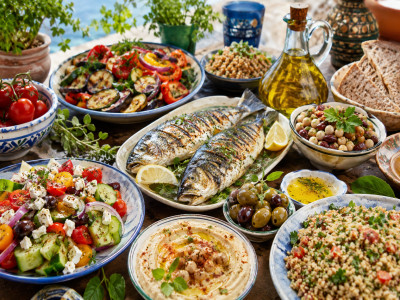
Year after year, decade after decade, one diet consistently rises to the top of every major scientific ranking: the Mediterranean diet. In 2026, with thousands of studies and decades of population research behind it, the Mediterranean diet remains what nutrition experts call the gold standard of healthy eating — and for very good reason.
This isn’t a fad diet with dramatic short-term promises. It’s a sustainable, flexible, and genuinely pleasurable way of eating that has been shown to reduce the risk of heart disease, stroke, type 2 diabetes, certain cancers, cognitive decline, and depression — while also supporting healthy weight management and longevity.
What Is the Mediterranean Diet?
The Mediterranean diet is not a single prescribed meal plan — it’s a pattern of eating inspired by the traditional dietary habits of countries bordering the Mediterranean Sea, particularly Greece, Southern Italy, and Spain. Its core principles are surprisingly simple:
The foundation is an abundance of vegetables, fruits, whole grains, legumes (beans, lentils, chickpeas), nuts, and seeds. Olive oil is the primary source of added fat. Fish and seafood are eaten frequently — at least twice per week. Moderate amounts of poultry, eggs, and dairy (particularly yogurt and cheese). Red meat is consumed rarely — perhaps a few times per month. Red wine is consumed in moderation with meals (optional and not a mandatory component). Herbs and spices flavor food instead of salt. Meals are eaten slowly, with family and friends — because the Mediterranean approach to eating is as much social and cultural as it is nutritional.
The Science: Why It Works
The evidence base for the Mediterranean diet is extraordinary in its breadth and consistency. The landmark PREDIMED trial — one of the largest nutrition studies ever conducted — followed over 7,000 high-risk individuals and found that those assigned to a Mediterranean diet supplemented with olive oil or nuts had a 30% lower risk of major cardiovascular events (heart attack, stroke, or cardiovascular death) compared to those following a low-fat diet.
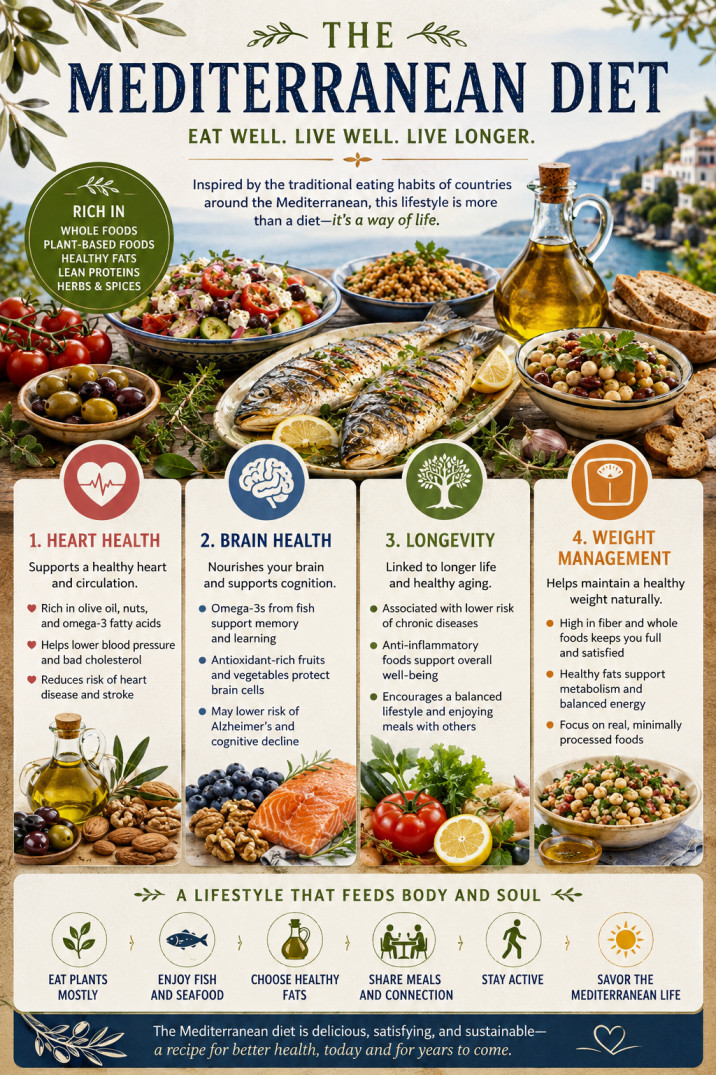
For brain health, a 2023 study in the journal Neurology found that greater adherence to the Mediterranean diet was associated with 23% lower risk of cognitive decline and dementia. For mental health, multiple studies have found that Mediterranean diet adherence is associated with significantly lower rates of depression — with one Australian trial (SMILES) demonstrating that dietary intervention alone produced clinical-level reductions in depression symptoms comparable to therapy.
For longevity, the Mediterranean diet is a cornerstone of every major Blue Zone — the regions of the world with the highest concentrations of centenarians — and is consistently associated with longer telomeres, a key biological marker of healthy aging.
Key Components and Why They Matter
Extra Virgin Olive Oil
The cornerstone of the Mediterranean diet, extra virgin olive oil (EVOO) is rich in monounsaturated fatty acids and powerful polyphenols with anti-inflammatory and antioxidant properties. The Mediterranean diet’s benefits are partially attributed to replacing saturated fats with EVOO — use it generously for cooking, salad dressings, and drizzling over finished dishes.
Oily Fish
Salmon, sardines, mackerel, anchovies, and tuna are rich sources of long-chain omega-3 fatty acids (EPA and DHA), which have potent anti-inflammatory effects and are critical for brain health, cardiovascular function, and joint health. Aim for at least two servings of oily fish per week.
Legumes
Beans, lentils, and chickpeas are nutritional powerhouses — rich in plant protein, fiber, complex carbohydrates, and micronutrients. Their high fiber content feeds beneficial gut bacteria, supports blood sugar regulation, and provides sustained energy. Mediterranean cuisines incorporate legumes into soups, stews, salads, and dips (like hummus) with great variety and flavor.
[IMAGE PLACEHOLDER: Beautiful bowl of Greek-style chickpea salad with tomatoes, cucumber, olive oil, and fresh herbs]
Vegetables and Fruits
Colorful, varied, and abundant — Mediterranean eating typically includes 7 to 10 servings of vegetables and fruits per day, providing a rich spectrum of vitamins, minerals, and polyphenols. Tomatoes, leafy greens, eggplant, zucchini, peppers, artichokes, and onions feature prominently.
How to Start Eating Mediterranean Today
Transitioning to a Mediterranean eating pattern doesn’t require overhauling your entire diet overnight. Start with small, sustainable shifts: replace butter with olive oil, add a handful of nuts to your daily snacking, swap one or two meat-based meals per week for a fish or legume-based dish, increase your vegetable intake at every meal, and choose whole grains over refined grains where possible.
The Mediterranean diet is fundamentally flexible and abundant — it’s about adding nourishing foods, not severe restriction. And because it emphasizes genuinely delicious food, prepared with care and eaten with enjoyment, it’s a way of eating most people can sustain for life.
Conclusion
The Mediterranean diet’s enduring status as the world’s healthiest diet is not based on marketing — it’s based on decades of rigorous scientific evidence from populations around the world. It protects your heart, nourishes your brain, supports healthy weight, reduces disease risk, and promotes longevity — all while delivering genuinely delicious and satisfying food. In 2026, the evidence is clearer than ever: if you want one dietary change that will have the greatest positive impact on your long-term health, this is it.