For most of the 20th century, education meant one thing: a teacher delivering the same content to a room full of students at the same pace, regardless of individual ability, learning style, or prior knowledge. The industrial-era classroom was designed for efficiency, not effectiveness. In 2026, AI is finally delivering on the promise of personalized learning at scale — and the results are transforming outcomes for students of all ages and backgrounds.
What Is AI-Personalized Learning?
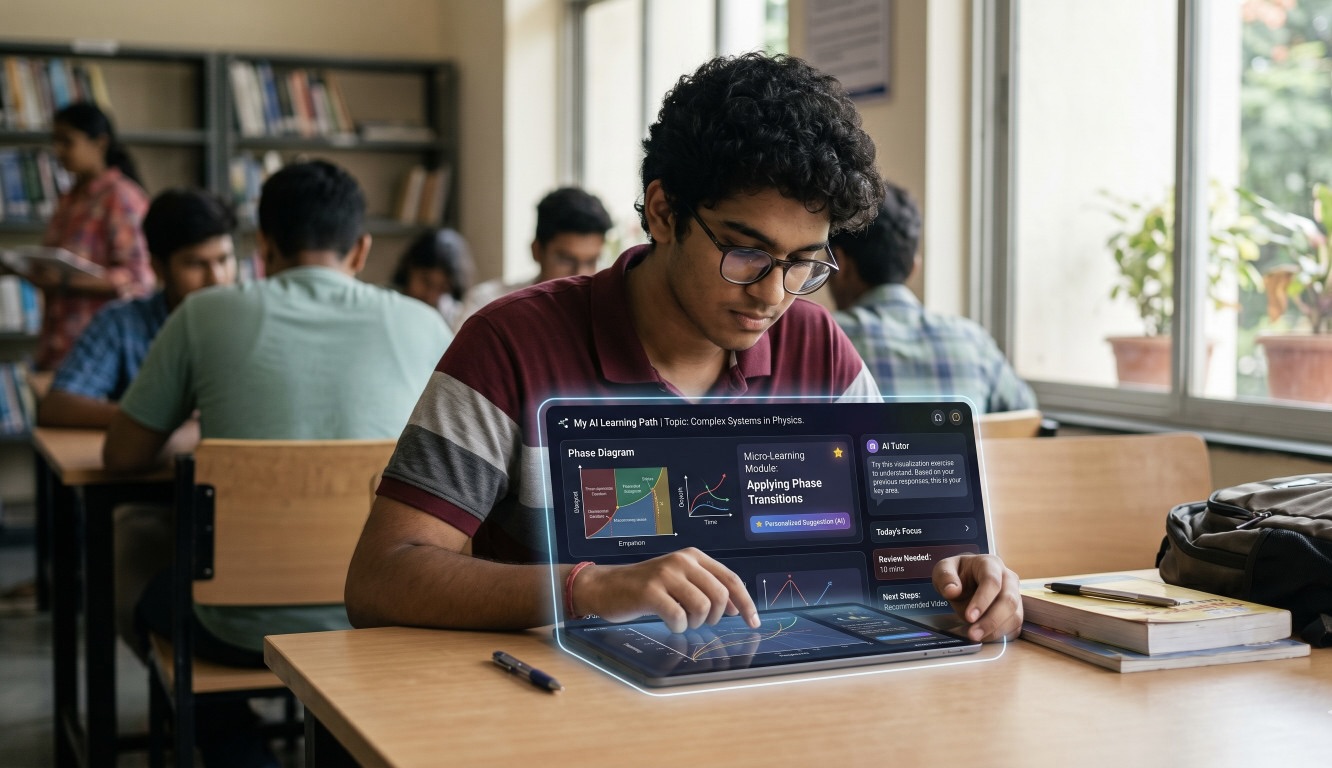
AI-personalized learning refers to educational systems that use artificial intelligence to dynamically adapt content, pacing, and teaching style to the individual needs of each student. Rather than following a fixed curriculum at a fixed pace, AI-powered platforms continuously assess what each student knows, identify gaps and misconceptions, and serve precisely the right content at precisely the right level of challenge.
This is known as “adaptive learning” — and in 2026, it has moved from pilot programs and ed-tech startups to mainstream adoption in K-12 schools, universities, and corporate training programs around the world.
How AI Personalization Works in Practice
Modern AI learning systems work by collecting a continuous stream of data about each student’s interactions: which problems they answer correctly, how long they pause before responding, which concepts they revisit, and how their performance changes over time. This data feeds machine learning models that build a detailed picture of each student’s knowledge state and learning profile.
Based on this profile, the AI system makes real-time decisions: presenting more challenging material when a student has mastered a concept, providing additional explanation and practice when they’re struggling, offering content in formats that match the student’s preferred learning style (visual, auditory, or kinesthetic), and adjusting the pacing to keep students in their optimal learning zone — challenged enough to grow, but not so overwhelmed they disengage.
Leading AI Learning Platforms in 2026
Several platforms have emerged as leaders in AI-personalized education. Khan Academy’s Khanmigo — an AI tutor built on advanced language models — provides personalized Socratic coaching across subjects, guiding students to discover answers through questioning rather than simply providing them. Duolingo’s AI system has dramatically improved language learning outcomes by optimizing review schedules and difficulty progression based on individual forgetting curves. Carnegie Learning’s MATHia platform has become a standard in US middle and high schools, providing personalized math instruction that consistently outperforms traditional classroom instruction in controlled studies.
In higher education, platforms like Coursera, edX, and Udacity are integrating AI tutors that provide personalized feedback on assignments, answer student questions 24/7, and identify at-risk students before they drop out.
The Impact on Teachers
A common concern about AI in education is that it will replace teachers. The reality in 2026 is quite different. AI is not replacing teachers — it’s liberating them from the most time-consuming and least fulfilling parts of their work.
When AI handles routine assessment, homework grading, and initial content delivery, teachers are freed to do what humans do best: build relationships, facilitate rich discussions, mentor students through challenges, and provide the emotional support and inspiration that no algorithm can replicate.
Early evidence suggests that classrooms using AI-assisted instruction see significant improvements in student outcomes — particularly for students who previously fell through the cracks of one-size-fits-all teaching. A 2025 study across 50 US school districts found that AI-personalized instruction improved math proficiency by 23% and reduced achievement gaps by 18% compared to traditional instruction.
Equity and Access
One of the most exciting aspects of AI-personalized education is its potential to democratize quality learning. A student in a rural school with limited resources can access the same quality of personalized instruction as a student at a wealthy urban private school. A first-generation college student can receive the same quality of academic support as someone with years of private tutoring.
While device access and internet connectivity remain barriers in some regions, the gap is closing rapidly — and organizations like Khan Academy and UNICEF are actively working to deploy AI-powered learning tools in underserved communities globally.
Challenges and Considerations
AI-personalized learning is not without challenges. Data privacy — particularly for minors — is a significant concern that requires robust regulatory frameworks. There is also the risk of over-reliance on algorithmic recommendations at the expense of broader educational goals like critical thinking, creativity, and civic engagement. And ensuring that AI systems are free from bias — that they provide equally high-quality personalization to students of all backgrounds — requires constant vigilance and auditing.
Conclusion
AI is delivering on one of education’s oldest promises: truly personalized learning for every student. In 2026, this is no longer a vision — it’s a reality in classrooms, universities, and workplaces around the world. The opportunity ahead is to scale these tools thoughtfully, equitably, and in service of the full range of human development that education is meant to provide. The future of learning is personal — and it’s here.